What Is Targeted Marketing: Meaning, Types, Benefits & Examples in Digital Marketing
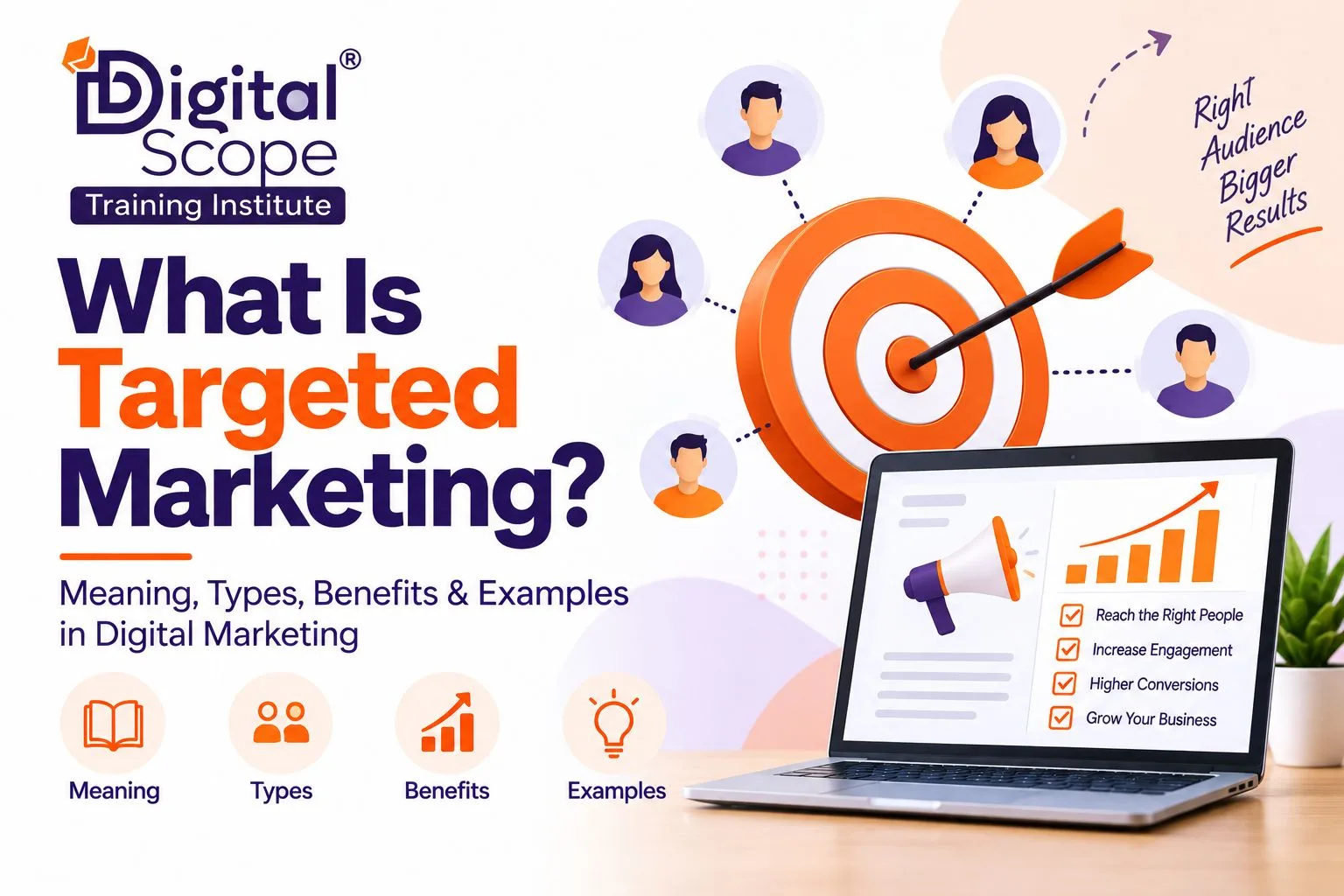
In today’s digital marketplace, businesses are no longer need to market to “everyone.” Brands now concentrate on reaching the right people with the right message at the right time, rather than spending money to show advertisements to people who might not be interested in listening. This strategy is called targeted marketing.
Achievement in digital marketing demands an understanding of targeted marketing, irrespective of whether you are using Google campaigns, Facebook ads, or email marketing. In that blog, we’ll discuss its meaning, types, benefits, examples, tools, and how learning this skill can boost your career.
What Is Targeted Marketing?
With targeted marketing, companies create messages specifically for a particular audience or demographic that is most likely to be interested in their products or services.
Targeted marketing concentrates on particular market segments rather than advertising to a large audience based on:
- The age
- The gender
- The Place
- Interests
- Behavior
- Buying patterns
This approach increases conversion rates, reduces ad costs, and improves overall ROI (Return on Investment).
A one-to-one teaching approach lets Digital Scope give dedicated attention to both struggling and advanced students, rather than pacing the entire course to the average learner.
What Is a Target Audience in Digital Marketing?
A target audience is the specific group of people a business wants to reach with its marketing efforts.
For example:
- A fitness brand may target people aged 18–35 who are interested in gym and healthy living.
- A luxury real estate company may target high-income professionals in metro cities.
- An online course platform may target students and working professionals looking for skill development.
Platforms like Meta and Google in digital marketing let marketers define audiences based on demographics, interests, and behaviors.
Types of Targeted Marketing
Targeted marketing can be divided into different categories based on how audiences are segmented.
1. Demographic Targeting
Demographic targeting concentrates on fundamental characteristics such as:
- Age
- Gender
- Income level
- Education
- Marital status
- Occupation
For example,
A baby products company targets new parents aged 25 to 35.
This is one of the most commonly and simple targeting methods used in digital ads.
2. Behavioral Targeting
Behavior targeting is predicated on online behavior and user actions, including:
Visits to websites
- Previous purchases
- Look up history
- Clicking patterns
- Cart abandonment
Example:
If someone visits an e-commerce website and views shoes but doesn’t purchase, they may later see ads for the same shoes. This is called retargeting in advertising.
Behavior targeting is highly effective because it targets people who have already shown interest.
3. Targeting in Context
Ads are displayed according to the content a user is currently viewing thanks to contextual targeting.
Example: When reading a travel blog, a user might come across advertisements for hotel reservations or airline tickets.
- A fitness article may include protein supplement advertisements.
- This type of targeting matches ads to relevant content, which increases engagement.
4. Geo-Targeted Marketing
Audiences are targeted by geo-targeting according to their location, including
Country
- State
- City
- Area radius
- Nearby stores
Example:
A restaurant can run ads only for users within a 5 km radius.
Geo-targeting is extremely useful for local businesses and service providers.
How Targeted Marketing Works (Step-by-Step)
Targeted marketing typically works as follows:
Step 1: Market Research
Learn about your product, opponents, and potential clients.
Step 2: Audience segmentation.
Divide the market into smaller segments based on demographics, preferences, behavior, and location.
Step 3: Create a customer persona.
Create a detailed profile for your ideal customer.
Step 4: Select Platform.
Choose platforms such as Meta Ads, Google Ads, or LinkedIn based on where your target audience spends time.
Step 5: Develop Personalized Content
Create ads, emails, or campaigns that are specifically tailored to that audience.
Step 6: Launch and Optimize.
Analytic tools can be used to monitor performance and optimize for better outcomes.
Benefits of Target Marketing
Targeted marketing provides multiple advantages:
- An increase in conversion rates – Ads reach more relevant audiences, increasing the likelihood of sales.
- Lower Advertising Costs – You avoid wasting budget on uninterested users.
- Improved Customer Engagement – Individualized messages feel more relevant and attractive.
- Higher ROI – Enhanced targeting leads to better returns on ad spend.
- Increased Brand Loyalty – Clients feel appreciated and understood.
Examples of targeted marketing
Here are some real-life digital examples:
- Amazon suggests products based on browsing and previous purchases.
- Netflix recommends shows based on viewer behavior.
- Facebook Ads display different ads based on users’ interests and demographics.
- Email marketing campaigns deliver personalized offers based on previous purchases.
These examples demonstrate how personalization improves engagement and sales.
Targeted Marketing vs. Mass Marketing
Targeted Marketing | Mass Marketing |
Focuses on a specific audience | Targets a broad audience |
Uses personalized messaging | Uses general messaging |
Higher conversion potential | Lower conversion precision |
Cost-efficient advertising | Higher budget wastage |
Data-driven strategy | Traditional broad approach |
Mass marketing works for large brands like Coca-Cola, but targeted marketing is more effective for most modern digital businesses.
Tools & Platforms Used in Targeted Marketing
Here are some well-known tools used in digital marketing:
- Meta Ads Manager (Facebook/Instagram)
Allows detailed targeting based on demographics, interests, and behaviors.
- Ads on Google
targets users based on their browsing habits, search intent, and keywords.
- LinkedIn’s manager of campaigns
the most effective B2B targeting based on industry, job title, and business size.
- Tools for email automation
- Using Mailchimp
- EmailGrid
These tools assist in sending segmented audiences personalized emails.
- Analysis Tools
Google Analytics 4, Search Console, Google Tag Manager
Monitor user behavior and ensure campaign performance.
How Your Career Will Benefit from Learning Targeted Marketing
If you want to work in digital marketing, you must first learn targeted marketing.
Here’s how it helps.
- Enhances ad campaign performance.
- Increases employment opportunities in marketing
- Helps freelancers produce better results for clients.
- Requirements for performance marketing roles
- beneficial for business owners and entrepreneurs.
Businesses today prefer marketers who understand audience segmentation and data-driven advertising.
Why Choose Digital Scope for Digital Marketing Course
- Advanced Digital Marketing Curriculum
Designed to match current industry requirements and evolving marketing trends. - AI-Integrated Digital Marketing Training
Learn modern AI-driven tools and strategies used in real campaigns. - Hands-On Practical Training
Skill-focused sessions covering SEO, SEM, and Social Media Marketing. - Live Project Assignments
Gain real-world experience through structured project-based learning. - Agency-Style Training Approach
Understand workflows used in digital marketing agencies and businesses. - Training on Industry-Relevant Tools
Exposure to platforms like Google Ads, Analytics, Meta Ads, and SEO tools. - Flexible Batch Timings
The Digital Marketing Course is Suitable for students and working professionals. - Placement & Career Support
Resume building, interview preparation, and career guidance sessions.
Conclusion
Targeted marketing is a highly effective strategy in digital marketing. Instead of wasting money on a large audience, businesses can target specific groups that are most likely to convert.
Marketers can create more effective campaigns by understanding their target audience’s behavior, demographics, and interests. Whether you are a student, freelancer, or business owner, mastering targeted marketing can help you achieve greater marketing success.=
FAQ
1. What is targeted marketing?
Targeted marketing focuses on a specific customer base that is most likely to buy their products or services.
2. What makes targeted marketing crucial?
Reaching the right audiences guarantees a higher return on investment, lowers advertising expenses, and boosts conversion rates.
3. How do you identify a target audience in digital marketing?
Using tools like GA4 and Meta Ads Manager, you can use market research, customer data analysis, demographics, interests, and online behavior tracking to determine your target audience.
4. What makes mass marketing different from targeted marketing?
Targeted marketing employs tailored messaging to reach a particular audience, whereas mass marketing uses generic messaging to reach a wide audience.
5. What is marketing that is geo-targeted?
Geo-targeted marketing is the practice of focusing on users based on their geographic location, such as a city, state, or a certain radius surrounding a business.